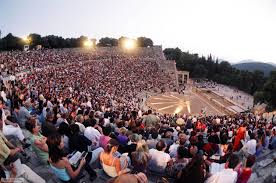



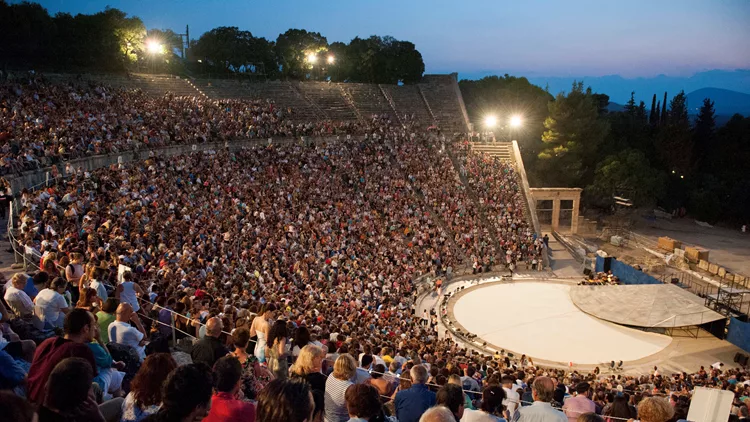



The new artistic director of the Athens Epidaurus Festival , Michael Marmarinos , gives us a first introduction to the program of theatrical performances that we will attend in Epidaurus in the summer of 2026. The program is, as he notes, "a part of a 'Whole' that will develop over the next three years. Different fields of the performing arts intertwine this year's repertoire with the very significant presence of dance , opera with the Greek National Opera presenting its first production there in the 21st century, and of course theater with the notable return of comedy and Aristophanes after last year's hiatus, thus strengthening the timeless essence of ancient drama in the turbulent present and its potential on the international stage . "In Epidaurus, a meeting ground, the public will have the opportunity to come into contact with special readings of Greek and foreign artists, in well-known but also some rarely presented works," according to Michael Marmarinos.
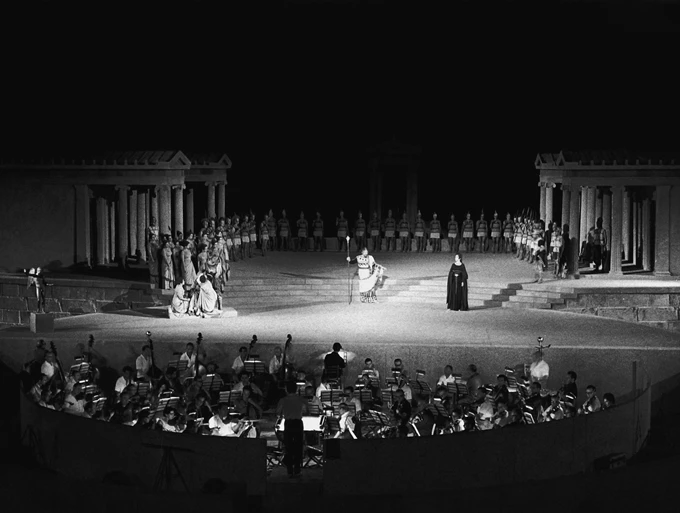
This year's Epidaurus season opens with Luigi Cherubini's opera "Medea" on June 20, 2026. A new production by the Greek National Opera , as part of the Athens Epidaurus Festival, which reconstructs the legendary 1961 production for a unique performance, directed by Alexis Minotis, with sets and costumes by Yannis Tsarouchis, choreography by Maria Horse, with Maria Callas in the title role. The Greek National Opera chooses to revive Medea with today's materials, based on the thematic axis it has set for the 2025-26 season, which explores the concept of "the opera of the future through the womb of the past". The Greek National Opera continues the great tradition of summer opera productions, this time at the Ancient Theater of Epidaurus, sixty-five years after the last time it presented an opera production there.
For the reconstruction of the historical 1961 production, the Artistic Director of the GNO, George Koumendakis, is staffing a new creative team, consisting of director Panayis Pagoulatos , Lili Pezanou (sets), Tota Pritsa (costumes) and Christos Tzioga (lighting). The title role will be interpreted by the great Italian dramatic soprano Anna Pirocci and with her Jean-François Borras as Jason, Tasis Christogiannopoulos in the role of Creon, Alisa Kolosova as Neris and Danae Kondora in the role of Glafki.
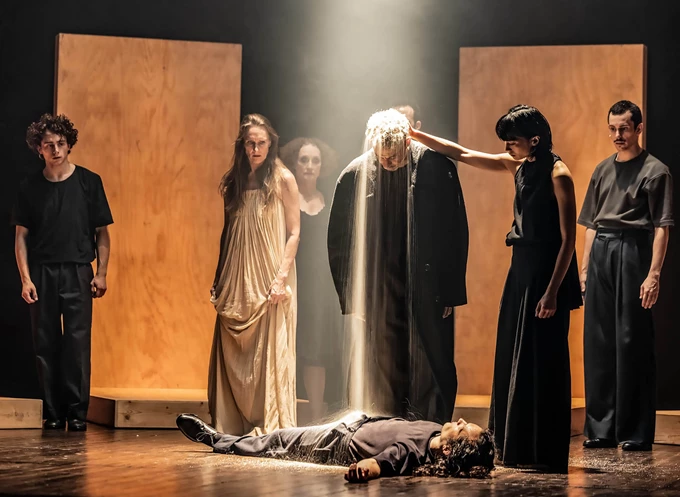
A radical "Antigone" from Norway
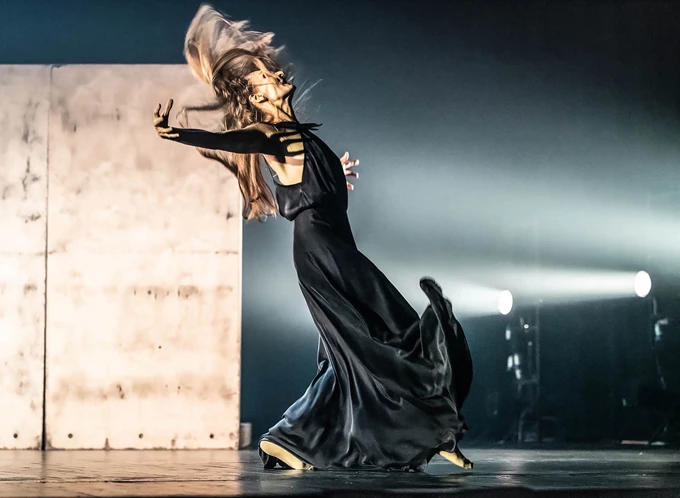
A new, radical interpretation of "Antigone" , a performance that unites the poetry of movement with the poetry of text and spoken word, drawing from Sophocles' tragedy, is coming on August 7 and 8 by 'Alan Lucien 'Ogen . One of Norway's most restless contemporary choreographers, writers and directors who we will meet for the first time on the Greek stage . "We are not just presenting Antigone again. We are stripping her down to her essence. 'Not only the words, but also their weight. 'Not only the conflict, but also its cost. Our Antigone is not just a stage presentation of Sophocles' text, but a bold reinterpretation of his timeless tragedy, through the physical poetry of Tanztheater, in dialogue with spoken word and contemporary dance", emphasizes the creator about the performance.
The performing arts group winter guests , which he founded twenty years ago and consists of dancers, actors, writers and designers, will meet on stage important collaborators - dancers of Pina Bausch's Tanztheater Wuppertal , with Ogen being the first choreographer invited to create a new, complete work for the group after the death of its founder.
More than a retelling, it is a rediscovery of the play's ideas through movement, speech and situations . The performance illuminates deep human expression, bringing it face to face with the play's unresolved dilemmas: duty, dignity, morality and the complexity of power. Through howling winds and bird cries, through desperate mourning and violent tyranny, the play's scenes hurl their meaning back to our contemporary dilemmas. Demanding and riveting, political without didacticism and lyrical without embellishment, "Antigone" poses the imperative question: what does it mean to act when law and justice do not go hand in hand?
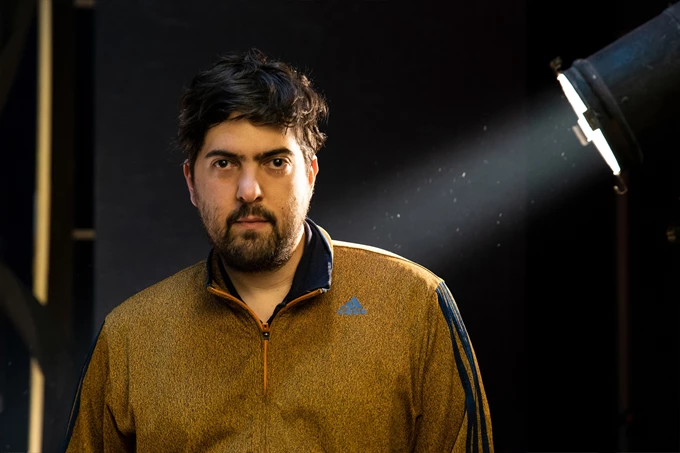

"Alcestis" & "Trojans" from the National Theatre
The National Theatre descends on the great Argolic theatre with two ambitious productions. We start with Dimitris Karantzas and the tragedy "Alcestis" by Euripides on 17 and 18 July . The great director returns to Epidaurus with a contemporary parable with a strong political overtone. Alcestis is orchestrated by Dimitris Karantzas as a stage experiment, where music, sound, movement and acrobatics of the theatrical style coexist organically, creating a fluid, liminal and constantly changing world.
Admetus will be saved from death only if someone else agrees to die in his place. Alcestis, his wife, offers herself in exchange. Her sacrifice unfolds publicly, before the eyes of the citizens, as a prescribed murder – an act that today is inevitably read as femicide, legitimized by the social and political order.
With a great group of actors and performers, the performance becomes a stage project that does not simply narrate the myth, but raises crucial questions about power, gender, sacrifice and the responsibility of society in the face of the death of the eponymous heroine – and not only that –. Hero Bezou and Yiannis Niarros play the leading couple with Theodora Tzimou, Konstantinos Avarikiotis, Kostas Nikoulis, Dimitra Vlagkopoulou, Giorgos Zygouris and Aeneia Tsamatis completing the excellent troupe.
Euripides' "Trojan Women" is staged by Eleni Efthymiou on behalf of the country's first stage on July 31 and August 1. The second production of the National Theater for this summer is also the only female signature that we will see in the ancient theater. A performance about the timeless horror of war and loss as a collective memory, but - mainly - about the female body as a universal symbol of human tragedy.
The eminently humanistic and deeply anti-war work of the great tragedian is brought to life by a group of twenty-two performers – including members of the En Dynamei Group – of all ages, with and without disabilities , and with live music on stage. The exceptional troupe includes Giorgos Karamichos, Argyris Xafis, Evi Saulidou, Nancy Sideri, Vasiliki Troufakou, Lydia Fotopoulou .
In Eleni Efthymiou's performance, the Trojans are not only the beautiful, healthy bodies of the privileged women of the royal family awaiting the final selection. Their bodies are mixed with other bodies – minors, disabled, elderly – who did not even decide for themselves before the war and who usually do not have the privilege of narration. Bodies that the system ostentatiously ignores, that the authorities choose how to manage or annihilate . In this, after all, war is 'just': it always equates the most with the least and with nothing at all.
And if all these skins, souls, gazes, wombs, memories can be seen symbolically as the (always) oppressed of this world , can these subjects regain the right to choose? How? By screaming hatred? By mourning or laughing amidst the chaos and impasse? Is there a way for the heroines to reappropriate their bodies?
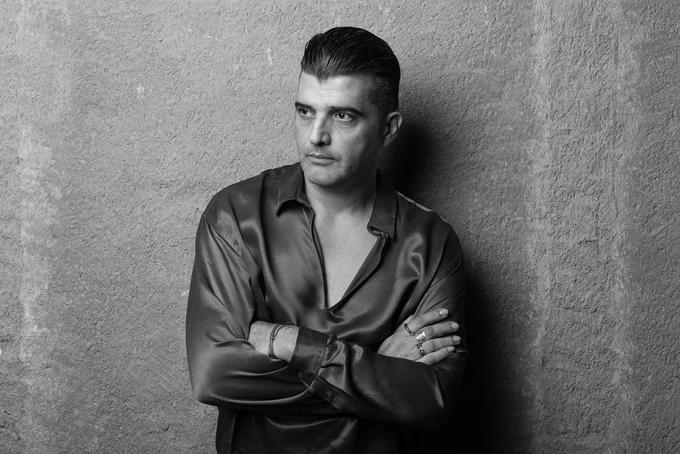

Christos Theodoridis to be baptized tomorrow
Christos Theodoridis is preparing his first descent into the Argolic theater this year with Aeschylus' "Persians" on July 3 and 4. The new generation director from Thessaloniki continues his work on the intellectual path he has formed in recent years with politically charged and particularly topical works ("To You Who Hear Me" by Loula Anagnostaki, "Who Killed My Father" by Edouard Louis, "Congress on Iran" by Ivan Viripagev, etc.) with the anti-war play "Persians".
With the news of the devastating defeat at Salamis as the narrative starting point and the central axis of the story being the lament for those who were lost, for the happy past that was lost, in this artistic project we find man and loss at the center. The names of people, about whom the Choros so obsessively asks the messenger, are not only Persian, but they are names of people who were lost and are being lost every minute in the present. Twenty-five actors, who remain constantly on stage, compose a Choros-protagonist, which with only tools of speech, movement and music, expresses the collective trauma of a numbed society .

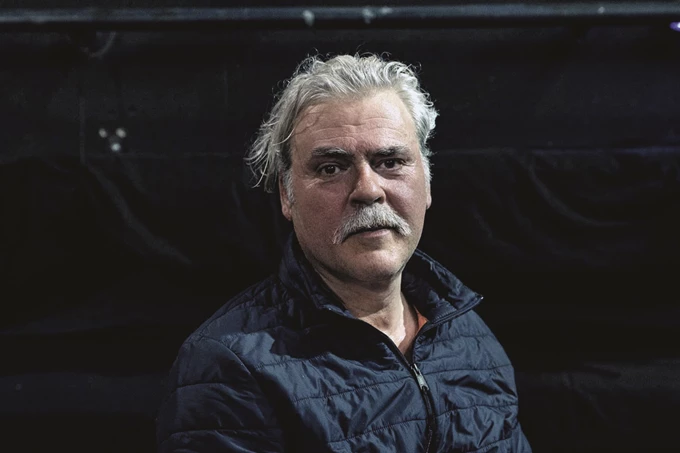
Aristophanes returns to Epidaurus
In the summer of 2025, comedy was missing from the Epidaurus Festival program, but this year we will see Aristophanes' comedies again in the Argolic theater, and more than one. A visit to Aristophanes' "Irene" is being prepared by Nikos Karathanos in the role of director on July 24 and 25 , with key collaborators Phoibos Delivorias signing the adaptation, the original text and the songs, while together with Angelos Triantaphyllou they sign the musical composition.
A new adaptation that functions as an answer to madness with madness, as the contributors characteristically say. Peace is the celebration of a lost rural world, a comic, irresistible argument, a feast of the common man with material from the very smoke of war, a lit bonfire amidst horror.
A large troupe is performing, in which Nikos Karathanos and Phoebus Delivorias also participate: Galini Hatzipashali, Thanasis Alevras, Panos Papadopoulos, Giannis Kotsifas, Ioanna Mavrea, Vasso Kavalieratou, Angelos Triantafyllou, Gilmaz Housmen, Alkis Bakoyannis, Konstantinos Kontogeorgopoulos, Konstantinos Zografos, Vasilis Papadopoulos, Giannis Sampsalakis, Spyros Bosgas, Antonis Christou , trumpet soloist Andreas Polyzogopoulos and other musicians.
The comedy reflects the intense social fatigue from the Peloponnesian War and deals with lyrical eloquence and the familiar Aristophanic sarcasm with the irrational obsession with war and its destructive consequences on the daily life, work and happiness of people. Aristophanes contrasts the violence and profit of the warmongers with the fertility, love and collective prosperity that peace brings . Despite the seemingly utopian solution, the comedy is not naive, as it recognizes the resistances, interests and inertia that prevent the restoration of peace.
"Peace" occupies a pivotal position in Aristophanes' overall work as the most conciliatory and optimistic of his political comedies . Despite its strong connection to the era that gave birth to it, it remains timeless because it illuminates a mechanism that is repeated to this day: wars that are prolonged at the expense of the many and for the benefit of the few .
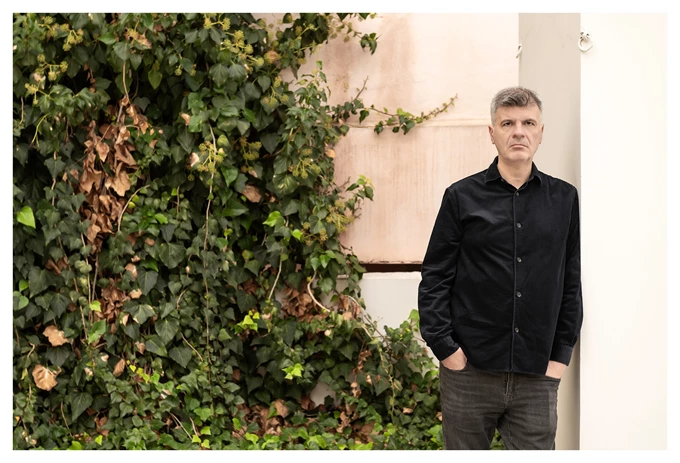
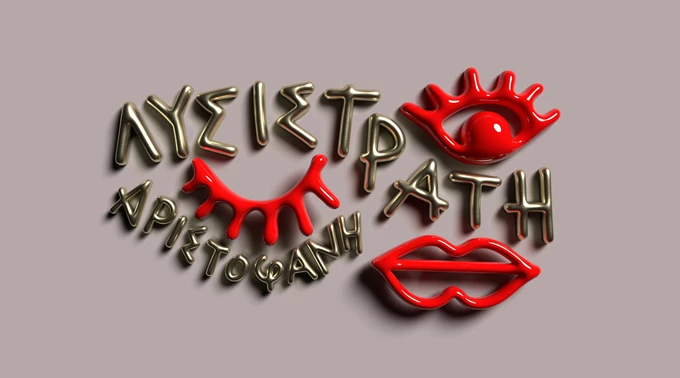
On August 21 and 22, the time comes for the State Theatre of Northern Greece and Asterios Peltekis with Aristophanes' "Lysistrata" . "Lysistrata" is not simply a comedy about war and love. It insists on being a deeply political, anthropocentric work that focuses on the moment in which a society, exhausted by decay, urgently seeks a new way of organizing itself. The NTNG presents a contemporary stage reading of Aristophanes' comedy, which, using laughter as a vehicle, addresses us with genuine lyrical "comic" seriousness about the entropy into which a society often falls.
Elisabeth Konstantinidou, Alexandra Palaiologou, Krateros Katsoulis, Panagiotis Petrakis, Nikos Georgakis are just some of the actors who will bring to life the play where war has become an end in itself, politics has been cut off from human experience and the body has been exiled from public discourse. The archetypal figure/heroine does not propose a reform, nor does she suggest a new institution. Lysistrata introduces something radically different: the reappearance of the body, desire, care and collective responsibility as a political act. Abstention from love does not function "punitively" but as an act of "suspending entropy". A temporary "freezing" of the system, so that it can be restarted.
At the core of Asterios Peltekis's directorial approach lies precisely this gesture, which is achieved not through violence or imposition, but through the conscious refusal to participate in a vicious circle . The women do not simply occupy the Acropolis, they "occupy" time, the flow of things, the very logic of inevitable destruction. Comedy, here, does not function as a release, but as a mechanism of revelation.
At the Ancient Theater of Epidaurus, where the community has been meeting for centuries to confront its limits, Asterios Peltekis' "Lysistrata" aspires to return not as a monument to ancient dramaturgy and a memory of an expression of the ancient world, but as a living political event. "A reminder that, even in the midst of the greatest decay, a restart is possible – as long as we dare to imagine our existence and, above all, our coexistence differently. As in a dream."
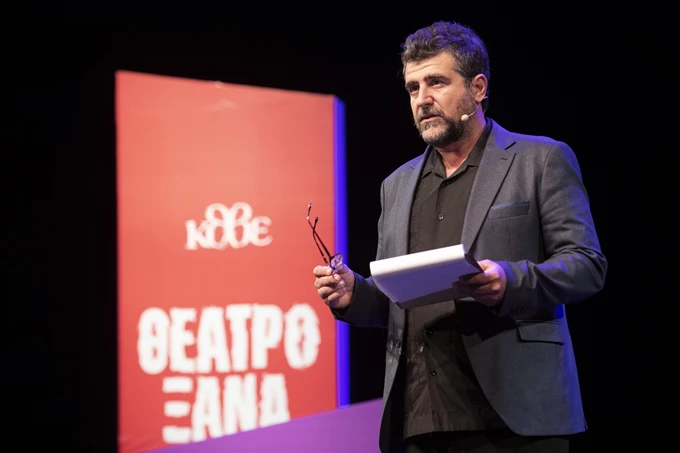

Finale for Epidaurus 2026 with the return of Thomas Moschopoulos
After several years, Thomas Moschopoulos returns to the Ancient Theater of Epidaurus with Euripides' "Ion", produced by the Cyprus Theatre Organization, on August 28 and 29. It is not a "pure" tragedy. It is one of the most enigmatic works of ancient drama. It moves on the border between tragedy and comedy, myth and realism, mysticism and skepticism, focusing on the issue of identity and belonging. It is a work that seems to speak directly to contemporary experience, in an era where everything is constantly being questioned and renegotiated.
The action takes place in the sacred oracle of Apollo at Delphi, a space that constitutes a threshold between the tangible and the invisible, between the public and the private. There, the young Ion grows up, without a name and without awareness of his origins. He struggles to construct an identity from fragments, at the same time that the viewers already know the truth. Through contradictions, refractions and misinterpretations, the cloudy, almost invisible past crystallizes into a solid, tangible present and an expectation of meaning emerges from the void.
The performance, a production directed by Thomas Moschopoulos, attempts to highlight the playful and ambiguous spirit of the work, transforming the stage into a multi-prism space of reflection where the images of truth and falsehood overlap, reveal and conceal, with the question of identity remaining open, fluid and agonizing.
This year's Epidaurus program includes and is framed by additional actions, which we will learn about soon.
>> Ticket pre-sale has started on more.com
BY:"https://www.athinorama.gr/theatre/3066742/epidauros-2026-oi-parastaseis-pou-tha-doume-sto-arxaio-theatro-epidaurou/#goog_rewarded"